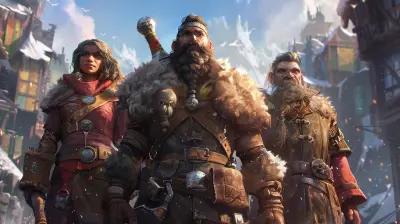
How Licensed Games Somehow Captured Movie Magic
25 July 2026
Let’s face it—licensed video games haven’t exactly had the best reputation through the years. For every gem, there’s a long list of rushed movie tie-ins that felt more like cash grabs than real gaming experiences. You probably remember renting one from the video store (yeah, remember those?) and wondering why the game had very little to do with the awesome movie it was based on. But here’s the thing—we’ve also got some licensed games that did capture the magic of the movies. Somehow, against all odds, they translated the cinematic experience into something interactive, emotional, and unforgettable.
So, how did these games do it? What makes a licensed game stand out while others flop harder than a straight-to-DVD sequel? Let’s jump into the world of movie-based video games and figure out how certain titles managed to actually feel like the films that inspired them.
The Long, Messy History of Licensed Games
Before we dive into success stories, let’s talk about where licensed games started—and why they got such a bad rap.Back in the '80s and '90s, movie studios saw video games as easy merchandise. Got a blockbuster film? Slap some pixel art on the cover and boom—instant hit, right? Well, not quite.
Many of these games were developed on tight schedules to coincide with theatrical releases. That meant corners got cut. Developers barely had time to build a functioning game, let alone one that felt like the movie. The result? Awkward controls, nonsensical plots, and graphics that looked nothing like the characters we loved.
But eventually, the tide started to turn...
Breaking the Curse: When Things Started Getting Better
It wasn't until developers began treating licensed games like passion projects rather than products that things improved. These teams actually cared about the source material. They wanted to honor the movies, not just profit from them.Some studios were even given early access to scripts, concept art, and character designs, which let them create something more than just a generic action-platformer with a popular movie name slapped on it.
Let’s take a look at a few of the licensed games that broke the mold.
Spider-Man 2 (2004): Swinging Into Cinematic Glory
If there’s one game that hit movie magic dead-on, it’s Spider-Man 2 for the PS2, Xbox, and GameCube. This game didn’t just adapt the film’s story—it let you be Spider-Man.Why It Worked
- Web-Swinging Over Everything: The web-swinging mechanics were revolutionary. You weren’t just pressing buttons; you were timing swings, navigating the city, and feeling the thrill of soaring above skyscrapers.- Open-World Immersion: For the first time, you could roam Manhattan freely. That sense of scale and freedom? Very cinematic.
- Voice Acting: Tobey Maguire, Alfred Molina, and Kirsten Dunst all reprised their roles. It made the whole thing feel authentic.
It wasn’t perfect, but it captured the feeling of being Spider-Man—and that’s where the magic kicked in.
GoldenEye 007 (1997): A Spy Thriller Reimagined
We can’t talk licensed games without bringing up GoldenEye 007. It didn’t just capture the James Bond vibe—it redefined the first-person shooter genre for consoles.What Made It a Classic?
- Innovative Gameplay: Multiple objectives, stealth mechanics, and smart AI made it more than a run-and-gun shooter.- Multiplayer Madness: Four-player split-screen battles in dorm rooms and basements? Iconic.
- Atmosphere: The game didn’t just retell the movie—it reimagined it. Levels were packed with tension, espionage, and that classic Bond swag.
GoldenEye proved that a licensed game could be both faithful and groundbreaking.
The Chronicles of Riddick: Escape from Butcher Bay (2004)
Here’s one you might not expect. Escape from Butcher Bay wasn’t just a solid licensed game—it was arguably better than the movie it was based on.How It Pulled It Off
- Deep Storytelling: It didn’t retell the film; it expanded on Riddick’s backstory.- Unique Gameplay Fusion: Stealth, action, platforming, and even RPG elements were blended seamlessly.
- Vin Diesel’s Involvement: Say what you will, but Vin cares about Riddick. His voice work and executive producer role added credibility and consistency.
It was gritty, intense, and full of atmosphere—like a prison-break movie you played through.
The LEGO Games: Parody Meets Passion
Think of all the LEGO video games—LEGO Star Wars, Indiana Jones, Harry Potter, and more. What’s their secret sauce? They’re not trying to be the movies—they’re lovingly poking fun at them.What Makes Them Shine?
- Accessible Gameplay: Simple yet satisfying mechanics for all ages.- Parodied Storytelling: They retell movie plots through slapstick and laughs but still manage to hit emotional beats.
- Fan Service Galore: Tons of Easter eggs, hidden characters, and familiar music cues.
These games work because they respect the source material while not taking themselves too seriously.
Movie Magic in Mechanics
It’s not just about visuals or voice acting—it’s about creating some kind of emotional crossover. The best licensed games capture the essence of the films they’re based on.Let’s break down some of the key ingredients:
1. Emotional Resonance
Games like The Lord of the Rings: The Two Towers or Return of the King made you feel like part of the fellowship. You weren’t just hacking through orcs—you were defending Middle-earth.2. Authentic World-Building
Mad Max (2015) gave us a dusty, brutal world that screamed post-apocalyptic chaos, just like the film. The vibe was just right—even if the story wasn’t directly lifted from a movie.3. Interactivity That Enhances Storytelling
Games like King Kong by Ubisoft let you play from both the human and Kong perspectives. You didn’t just witness the epic battles—you took part in them.When Developers Are Fans… We All Win
Want to know the number one reason a licensed game feels cinematic? Because it was made with love. Developers who love the movies bring that passion into every line of code.They obsess over little details—the way a character moves, how a scene should feel, or how to adapt a film moment into gameplay that makes sense. It's the reason Batman: Arkham Asylum felt like a dark, gritty comic book come to life, even though it wasn’t tied directly to a specific movie.
The Evolution of Licensed Games: Bigger Budgets, Bigger Dreams
Nowadays, licensed games aren't cheap spin-offs—they’re major investments. Studios like Insomniac (Spider-Man 2018) and Rocksteady (Batman: Arkham trilogy) are trusted with billion-dollar franchises. Why? Because they’ve proven they can deliver both fan satisfaction and financial returns.These modern titles blur the lines between film and interactive storytelling. Cinematic cutscenes, A-list actors, and beautiful visuals give us stories that resonate deeply—sometimes even more than the movies themselves.
Why Movie Magic Still Matters
Let’s be real—movies give us feelings. They make us cheer, cry, laugh, and sit on the edge of our seats. The best licensed games find smart ways to take those emotions and stretch them into hours of gameplay.It’s like taking a two-hour film and living in it for twenty, forty, or even a hundred hours. You’re not just watching your favorite character—you are them. And that’s an experience movies alone simply can’t offer.
Not Just Nostalgia: These Games Still Hold Up
Sure, part of the appeal is nostalgia. Who doesn’t want to relive the thrill of swinging through NYC as Spidey or sneaking through a space prison with Vin Diesel?But these games also stand on their own merits. They’re well-designed, fun to play, and often more thoughtful than they get credit for. And that’s why movie magic lives on—not just in theaters, but in our controllers and keyboards too.
Wrapping It Up
So, how did licensed games somehow capture movie magic? By going beyond the surface. By embracing the worlds, themes, characters, and emotions that made those films special in the first place. And most of all, by turning passive viewers into active participants in the story.Whether you're slicing through Gotham’s thugs, swinging through Manhattan, or building Hogwarts brick by brick in LEGO form—those magical moments stick with you. That’s not just smart game design. That’s storytelling with heart.
And in a world where more games are becoming cinematic masterpieces in their own right, it’s exciting to think about what’s next. Who knows? Maybe your favorite movie is just a game away from becoming your favorite adventure.
all images in this post were generated using AI tools
Category:
Gaming NostalgiaAuthor:

Tayla Warner