How Games Are Telling More Human Stories Than Ever Before
13 June 2026
Once upon a time, video games were mostly about saving princesses, blasting aliens, or munching pellets in a neon maze. You’d pick up a controller, shoot some bad guys (or maybe become one), and call it a day. Storylines were often an afterthought—just a reason to jump from Level 1 to Level 10. Fast forward to today, though, and something incredible has happened. Games are evolving into some of the most emotionally rich, narratively powerful experiences you can find.
So, what’s changed? How did we go from “It’s dangerous to go alone!” to full-blown stories that make us cry, cheer, and stare at the credits in awe for ten minutes after finishing?
Let’s dive deep into why and how games are now telling more human stories than ever before.
? When Did Games Start Getting This Emotional?
There’s no doubt that emotional storytelling in games isn't brand new. Even early games like _Final Fantasy VII_ tugged at our heartstrings (RIP Aerith), and _Metal Gear Solid_ had its fair share of mind-bending drama.But in the last decade or so, something shifted.
Game developers began to realize that storytelling wasn’t just a side dish—it could be the whole main course. And when you think about it, games have one massive advantage over movies or books: interactivity. You’re not just watching someone’s story. You’re living it. That gives developers a unique chance to craft truly personal, deeply human narratives.
? Characters That Feel Realer Than Reality TV Stars
One major way games have become more human? Complex characters.Let’s take Ellie from _The Last of Us_ series. She’s not just some zombie-slaying badass. She’s layered—angry, vulnerable, funny, tragic. You feel her pain, her hope, her need for revenge. She makes mistakes. She’s flawed. Basically, she’s human. And when you’re walking through an abandoned building with her, weapon in hand and heart pounding, it feels real.
Or what about Arthur Morgan in _Red Dead Redemption 2_? He starts as a rugged outlaw but slowly reveals a depth of conscience and reflection that’s rare even in big-budget Hollywood films. His internal struggle between loyalty, morality, and survival is something many of us can relate to—even if we’ve never ridden a horse outside of a Renaissance Faire.
This kind of emotional complexity? That’s what pulls players in and keeps them thinking about the game long after it’s over.
? Real Emotions in Unreal Worlds
We don’t just connect with characters because they’re well-written. We connect because the emotions they go through feel real.Take _Life is Strange_, for example. It’s not about explosions or epic battles. It’s about friendship, time travel, and the soul-crushing choices you make. The choices you struggle with in that game—like telling your best friend a painful truth or keeping a life-altering secret—stick with you. They feel like real dilemmas.
Even games like _Celeste_, a pixelated platformer about climbing a mountain, hit hard emotionally. On the surface, it’s about mastering tight controls and overcoming obstacles. But underneath? It’s a raw, honest look at anxiety, depression, and self-worth. Madeline isn’t just climbing a mountain—she’s climbing her mountain, emotionally and mentally. And aren’t we all, in our own way?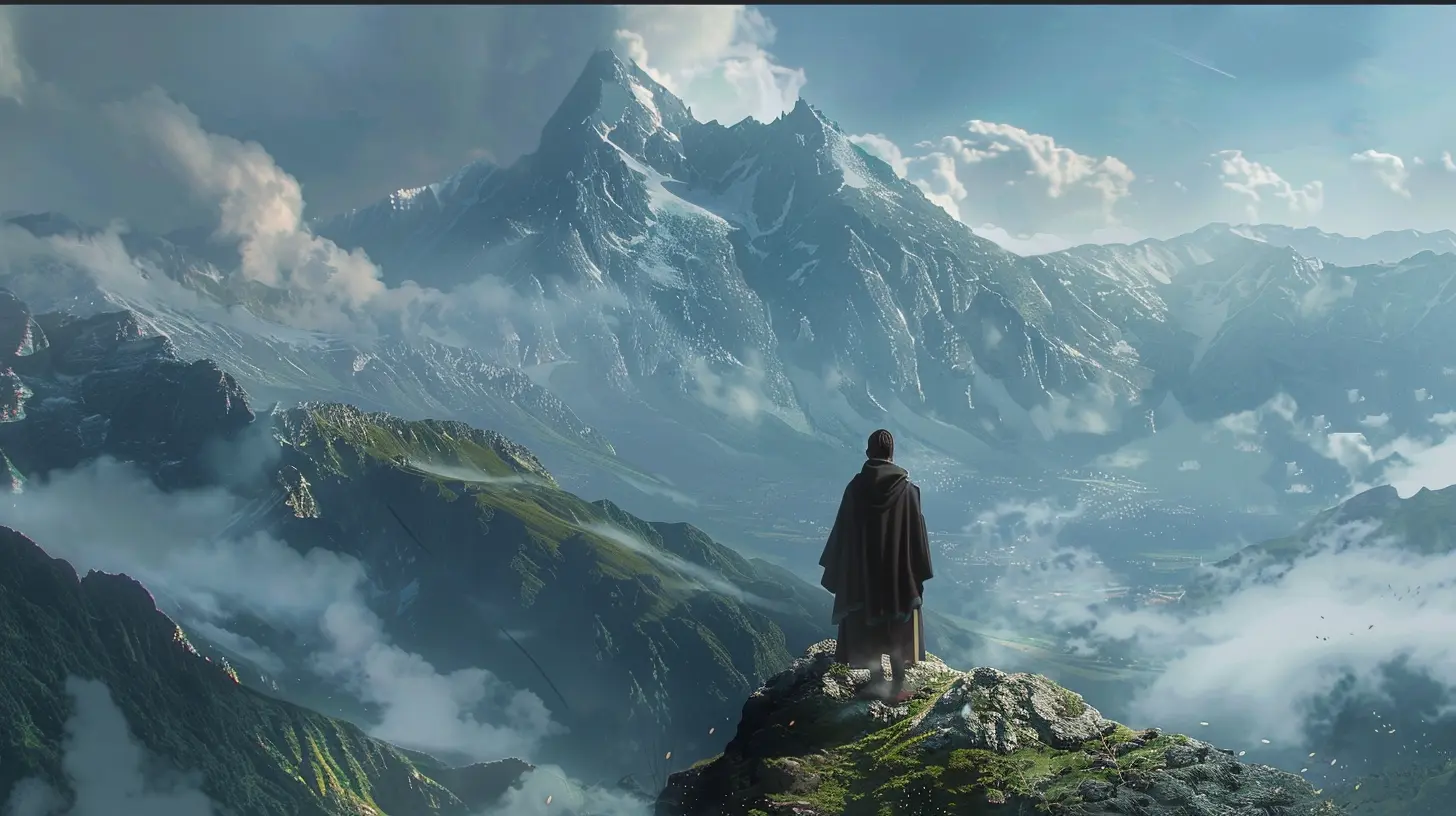
? Writing Like It’s Hollywood (But Better)
Let’s give a round of applause to the writers out there making magic behind the scenes. Game dialogue used to be...well, kinda cringe. But with top-notch scripts, professional voice actors, and cinematic direction, games have stepped into the storytelling spotlight.Games like _God of War (2018)_ redefined what “video game writing” even means. From the quiet, tense dynamic between Kratos and Atreus to the subtle changes in their tone and body language, the whole experience feels more like watching (and participating in) a prestige HBO drama than playing a game.
And here's the thing: You don’t just watch the story unfold. You help shape it. That’s something movies and TV can’t offer.
?️ You’re Not Just Watching the Story—You’re Making It
Interactive storytelling is the beating heart of this whole evolution.In _Mass Effect_, every big decision you make influences the outcome of the story—and how NPCs treat you. Want to be the galaxy’s savior or its tyrant? That’s up to you.
In _Detroit: Become Human_, your choices can lead to wildly different endings—some hopeful, some tragic. Each playthrough feels like your own personal version of the story.
These player-driven narratives make the emotional connections even stronger. It's like building your own version of a novel, piece by piece, with your choices as the pen.
? Games Are Reflecting Real-World Issues
The cherry on top of this storytelling revolution? Games aren’t afraid to get real.Titles like _Papers, Please_ tackle moral ambiguity in a totalitarian regime. _This War of Mine_ puts you in the shoes of civilians trying to survive a war-torn city. _Hellblade: Senua’s Sacrifice_ digs deep into mental health issues, presenting a visceral and respectful portrayal of psychosis.
These aren’t just “heavy” games. They’re important. They show us new perspectives. They challenge our assumptions. And they remind us that behind every pixel is a deeper, more human message.
? Indie Games Are Pushing the Envelope
Let’s take a moment to shout out the indies—the ones really taking storytelling risks.Big studios often have to play it safe. But indie developers? They’re bold, they’re experimental, and they’re hungry to tell stories that matter.
Games like _Night in the Woods_ explore themes like economic hardship, mental illness, and disillusionment with small-town life. It’s quirky, a little weird, but heartbreakingly honest.
Or take _Gris_, a stunning platformer that uses color, movement, and music to tell a story of grief—without a single word of dialogue. Yep, you read that right. No words, just feels.
These indie gems prove that you don’t need billion-dollar budgets to tell unforgettable, deeply human stories.
? Why It All Matters
So, why should we care that games are getting more emotional, more human, more…real?Because storytelling is how we connect. It’s how we make sense of our messy, complicated world. And when games tell stories that mirror our own struggles, hopes, and fears, they become more than entertainment—they become reflections.
Games help us walk in someone else’s shoes. They give us empathy. They teach us things about ourselves we didn’t even know we needed to learn.
Whether you’re navigating grief in _Spiritfarer_, identity in _Disco Elysium_, or fatherhood in _God of War_, modern games are no longer just about escape—they’re about understanding.
? Final Thoughts: What This Means for the Future of Gaming
We’re just scratching the surface. As technology improves, writing gets sharper, and developers take bigger creative swings, we can expect even more powerful, human-driven stories in gaming.Maybe one day, games will be the main medium we turn to for soul-touching narratives. Honestly, it’s already happening. And if this trend keeps going, the phrase “video game storytelling” might just become synonymous with “the best storytelling around.”
So, next time someone tells you that games are just for kids, or that they’re mindless entertainment? Smile, hand them a controller, and let a beautifully human story do the talking.
all images in this post were generated using AI tools
Category:
Game StorylinesAuthor:

Tayla Warner
Discussion
rate this article
1 comments
Payton Hayes
It's inspiring to see games explore deep human themes. They connect us in unique ways.
June 17, 2026 at 4:55 AM
Tayla Warner
I completely agree. Games have a remarkable ability to resonate with our emotions and experiences, making those themes even more impactful.