Games That Blur the Line Between Hero and Villain
4 March 2026
Let’s be real for a second — playing the “good guy” in video games can feel a little… predictable, right? You save the world, rescue the princess, stop the alien invasion — rinse and repeat. But what happens when a game flips the script? When you're not sure whether you're the hero, the villain, or something entirely different? That’s when things get really interesting.
In this article, we’ll dive into a list of games that don’t just challenge you to win — they challenge your morals, your perspective, and your sense of right and wrong. These are the games that blur the line between hero and villain — the ones that force you to pause and ask, “Wait… am I the bad guy?”
Let’s get into it.
Why Games With Moral Ambiguity Hit Harder
Before we start listing titles, let’s talk about why this kind of storytelling works so well in games.Unlike movies or books, games put you in control. It’s one thing to watch a morally gray character make a tough decision — it’s a whole different thing when you’re the one making it. When you’re given a choice between saving a village or betraying your friends, your actions carry emotional weight. That’s powerful stuff.
Games that blur the hero/villain line suck you in because they mimic real life. No one is all good or all evil — we’re complicated creatures, and when games reflect that, they feel authentic and unforgettable.
Alright, now that we’ve set the stage, here are some of the best games that make you question your own role in the story.
1. The Last of Us Series – Would You Do the Same?
Let’s kick things off with a bang. If you’ve ever played The Last of Us — especially Part II — you know exactly what I’m talking about.You start with Joel, a hardened survivor who seems like your classic gruff hero. But by the end of the first game, he makes a decision that sparks massive debate to this day. Did he save Ellie because he cared for her like a daughter? Or did he doom humanity for selfish reasons?
In Part II, you’re flipped onto the other side. You play as Ellie, but also as Abby — the so-called “villain” of the first game’s ending. And you start to understand that both sides have reasons, pain, and humanity. There’s no clear right or wrong anymore.
👉 This game doesn’t just blur the line — it erases it with a sledgehammer.
2. Spec Ops: The Line – War Is Hell, Literally
You remember the old Call of Duty days where you’re the patriotic hero saving the world from evil? Spec Ops: The Line starts like that… and then drags you through a psychological battlefield that makes you question every bullet you fire.Set in a sand-covered, post-disaster Dubai, you're Captain Walker, on a mission to find a missing unit. Simple enough, right? Wrong. Every choice you make leads you deeper into madness. The game forces you to commit atrocities — all under the illusion of being the good guy.
By the end, you're not sure if you're liberating civilians or justifying war crimes.
👉 It's heavy. It's dark. And it's unforgettable.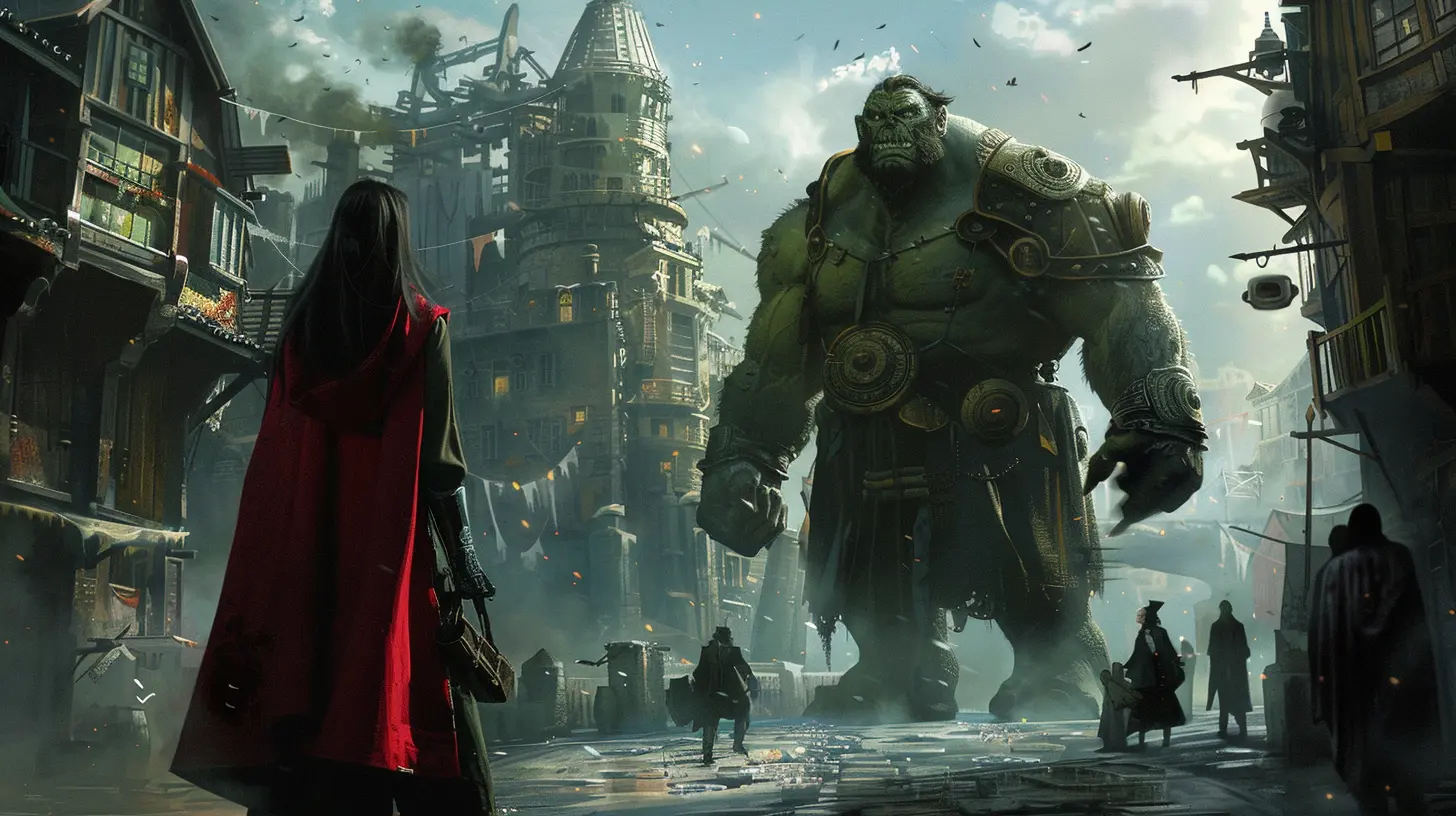
3. Red Dead Redemption Series – Outlaws With a Code?
Rockstar's Red Dead Redemption series is dripping with moral complexity. You play as outlaws — Arthur Morgan and John Marston — but they’re not cartoon villains. They're layered, human, and full of contradictions.Arthur, in particular, is fascinating. You can play him as a ruthless gunslinger or a man seeking redemption. His interactions with others and his internal struggle make it clear that he’s no saint, but maybe not a devil either.
👉 He's more of a man trying to walk a crooked line straight.
4. Bioshock Infinite – What If the Savior Is Also the Destroyer?
Bioshock Infinite isn’t just a mind-bending journey through alternate realities and sky cities. It also makes you question who you're actually saving and what you’re saving them from.You play as Booker DeWitt, a man on a mission to "bring us the girl and wipe away the debt." But as the story unfolds, you realize that your past isn’t so noble — and your mission is more disturbing than heroic.
By the end, you’re left questioning everything — including your own identity.
👉 It's like peeling an onion, except each layer stings worse than the last.
5. Undertale – A Simple Game With Deep Morals
If you judged Undertale by its pixel art, you'd assume it's a quirky little RPG with funny characters and colorful battles. And it is — but it’s also one of the most morally challenging games ever made.Why? Because how you choose to play it determines everything.
You can go full "Pacifist" and never kill a soul… or you can choose the "Genocide" route and eliminate everyone. And the game remembers. Actions have consequences. The more violent your path, the more the world itself reacts with horror — and the "villain" might just be your reflection.
👉 It’s like looking in a mirror you weren’t ready to look into.
6. Grand Theft Auto V – No Heroes Here
Okay, let’s be honest — no one expects heroes in GTA V. But that’s the point.You play as three antiheroes: Michael, the retired bank robber; Franklin, the street-smart hustler; and Trevor, the chaotic wildcard. None of them are "good guys" in the traditional sense. Yet, throughout the game, you find yourself rooting for them, caring about their problems, and even justifying their crimes.
The game doesn’t try to justify their actions — it just makes them so human that you want to.
👉 It’s like cheering for the bad guys in a heist movie — you know it’s wrong, but you still do it.
7. Infamous Series – Power Makes the Choices Harder
In Infamous, your choices literally shape the character you become. As Cole MacGrath (and later Delsin Rowe), you’re given superpowers in a city on the brink. You can help people, become a protector, or use your powers to dominate and destroy.But what’s fascinating is that the game doesn’t make the “evil” path feel cartoonish. Sometimes, those choices feel necessary. Effective. Realistic, even.
👉 The story asks: If you had the power to change things… would you use it for others, or for yourself?
8. Heavy Rain – Everyone Has Secrets
Heavy Rain is a psychological thriller drenched in mystery and tension. You control four characters, all trying to stop the Origami Killer and save a kidnapped child. Sounds heroic, right?But none of the characters are pure.
One's a drug addict. Another has a shady past. And as the story unfolds, you realize that being the "hero" might mean doing some truly dark things — including murder, deception, or worse.
👉 It’s like watching a car crash in slow motion — except you’re the one behind the wheel.
9. Mass Effect Series – The Weight of Every Choice
If you've played Mass Effect, you know Commander Shepard is hailed as a hero. But with great power comes great… moral crises.Throughout the trilogy, you're faced with decisions that affect entire civilizations. Save one alien race — doom another. Use harsh tactics to win — or risk failure by playing by the rules. Your dialogue choices, alliances, and sacrifices all blur the line between noble and necessary evil.
👉 It’s like being a politician in space, but with more explosions and aliens.
10. Dishonored – Vengeance or Justice?
In Dishonored, you’re Corvo — a bodyguard framed for murder, turned supernatural assassin. Sounds like a typical revenge story, right?Except the game gives you freedom. You can sneak through levels without killing a single soul, or you can go full chaos mode and leave a trail of blood behind. And guess what? The world changes based on your choices — becoming darker and more violent if you do.
So, are you an avenger? Or a monster wearing justice as a mask?
👉 The line's paper-thin, and it’s easy to tear.
Why These Games Stay With Us
So, what’s the common thread connecting all these games? They don’t just entertain — they confront. They take moral gray areas and toss you smack in the middle. They force you to make choices with no clear “good” or “bad,” just consequences.And that’s what makes them unforgettable.
When a game forces you to think, “Was I right to do that?” long after you've put down the controller, it’s done something truly powerful. It’s not just a game anymore — it’s a mirror. One where you might not fully like what you see.
Final Thoughts: Embrace the Gray
Games that blur the line between hero and villain remind us that morality isn’t black and white — it’s all shades of gray. And sometimes, those shades are what make the story truly shine.Whether you're making impossible choices, facing the consequences of your actions, or just questioning your own motivations, these games challenge the way we think about right and wrong.
So next time you pick up a controller, ask yourself: Am I the hero… or just someone trying to survive in a world that doesn’t play fair?
all images in this post were generated using AI tools
Category:
Game StorylinesAuthor:

Tayla Warner
Discussion
rate this article
2 comments
Joy Price
This article brilliantly captures the complex narratives that make gaming so compelling. The exploration of characters who straddle the line between hero and villain invites players to confront their own moral choices. It’s a reminder that in games—and life—our motivations can be just as ambiguous as our actions.
March 9, 2026 at 4:43 PM
Tayla Warner
Thank you for your insightful comment! I'm glad you appreciated the exploration of moral ambiguity in gaming. It truly reflects the complexities of both gameplay and real life.
George Coleman
Great article! It’s fascinating how these games challenge our perceptions of right and wrong. Exploring the complexities of heroism and villainy adds depth to the gaming experience. Keep up the insightful content!
March 9, 2026 at 3:39 AM
Tayla Warner
Thank you! I'm glad you enjoyed it. The moral complexities in games really make them intriguing, don't they?