From Floppy Disks to Cartridges: A Look at Gaming Formats of the Past
3 January 2026
Let’s hop into a time machine and travel back before fast internet, before cloud saves, and way before ultra-HD graphics. Yeah, we’re going old school — back to when games came in boxes that rattled with disks or cartridges, and blowing into a game cartridge was a legitimate form of tech support.
Welcome to the golden era of classic gaming formats! In this nostalgic ride, we’ll dive deep into the evolution of physical gaming formats, from humble floppy disks to beefy cartridges, and uncover how these relics shaped the way we play today.
The Dawn of Physical Formats in Gaming
Before we had the digital downloads and streaming consoles of today, gaming had a more tangible, almost ritualistic aspect. Putting a game into your system was a hands-on experience — you could touch it, smell it (not recommended), and even collect it. There was something uniquely satisfying about cracking open a plastic case, inserting a disk or cartridge, and hearing that startup chime.Let’s break down the major players in the physical format space and how they played a role in shaping the gaming industry.
Floppy Disks: The OG Format (Late '70s to Mid '90s)
What Were Floppy Disks?
If you ever saw a 3.5-inch square with a metal slide or, even more ancient, an 8-inch sheet-like disk, congratulations — you’ve come across the iconic floppy disk. Back in the day, these were the format for PC gamers.Imagine trying to play a game, but every level was on a separate disk. That’s how it was in the '80s and early '90s. You’d get a pack of floppies with names like “Disk 1 of 4” and you better not scratch or lose one — or it was game over for good.
Why They Mattered
Floppy disks were like the first taste of what was possible in home gaming. They ran on personal computers and offered something consoles couldn’t at the time — complexity. Games like “Prince of Persia” and “Monkey Island” came to life on these humble squares.They also taught us patience. Loading screens took ages, and disk swapping was a skill every player had to master.
Cassette Tapes: Gaming’s Forgotten Format
Yep, You Read That Right
Before floppy disks really took off, especially in the UK and other parts of Europe, cassette tapes were a legit format for games. Systems like the ZX Spectrum and Commodore 64 used audio tapes to store game data. You had to push play on a tape deck to load a game... and wait. And wait.The Pros and Cons
The best part? They were dirt cheap. The worst part? Oh boy, the load times. We’re talking 5-10 minutes minimum. And if you accidentally bumped your tape recorder? You were starting over.But despite all that, those little tapes introduced millions to gaming. They were the gateway drug for '80s kids with a dream and a joystick.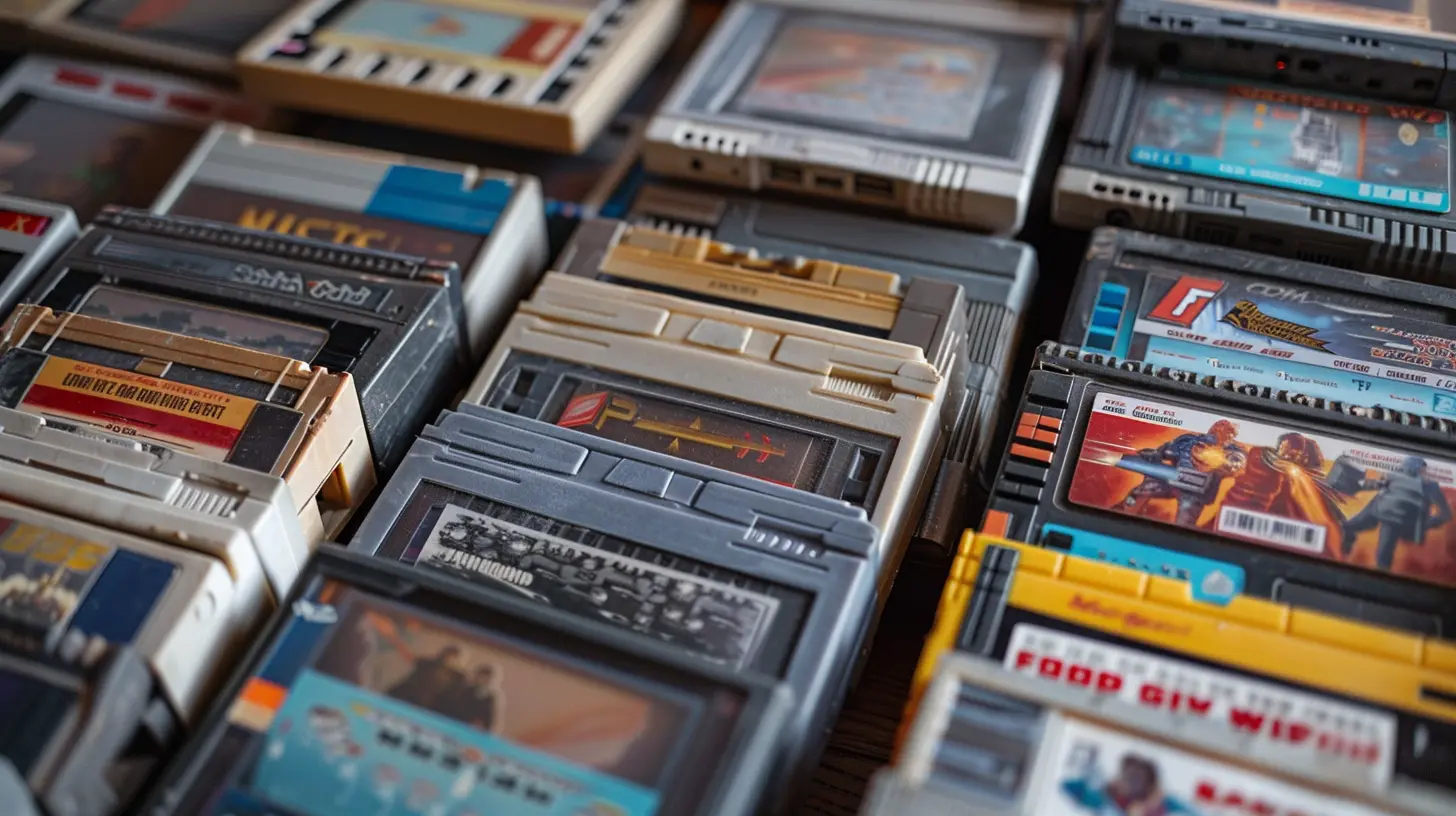
Game Cartridges: A Game-Changer (Literally)
Let’s Talk Cartridges
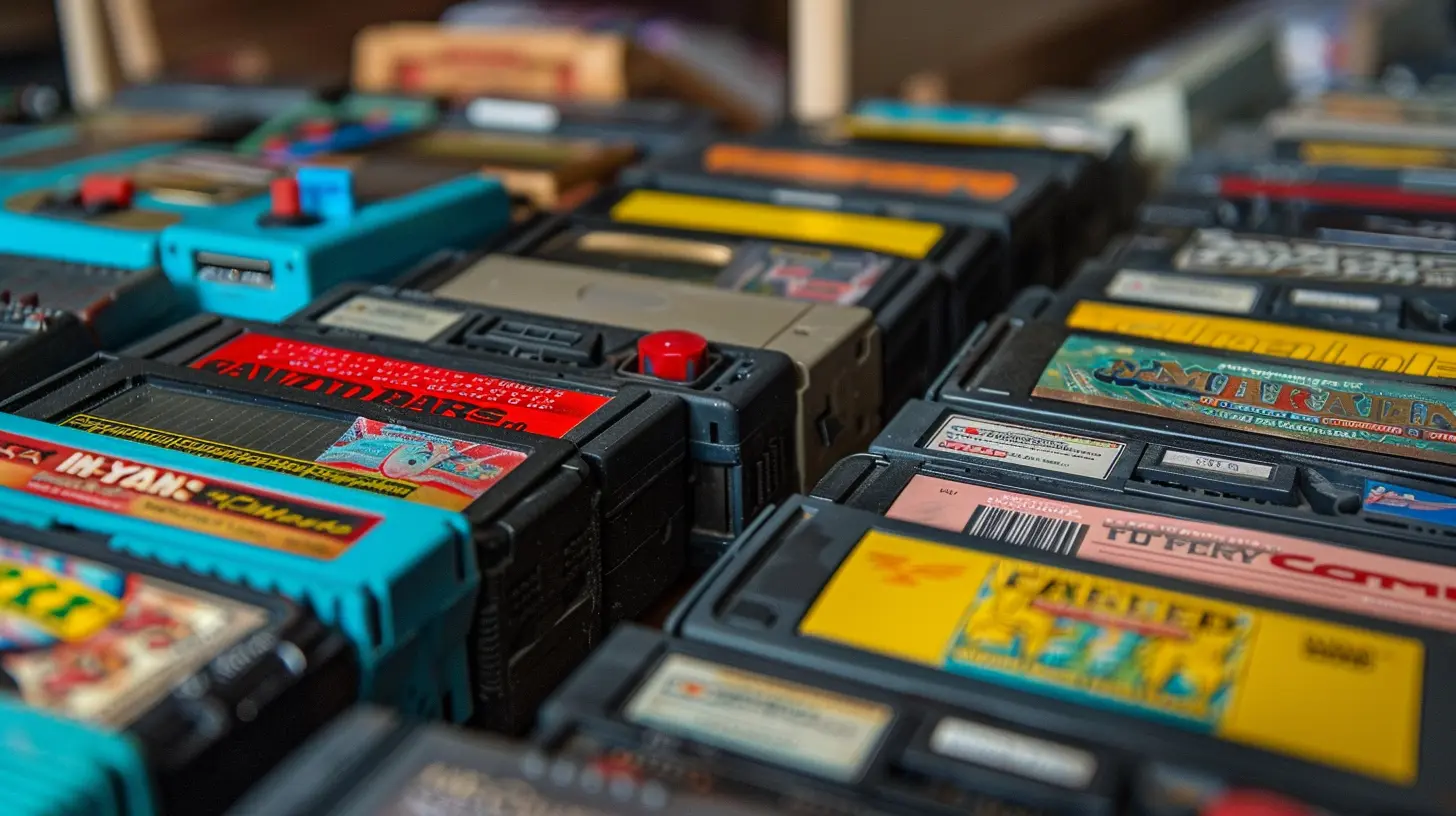
Cartridges were like the tanks of gaming formats — chunky, invincible, and built to last. From the Atari 2600 to the NES to the Nintendo 64, cartridges ruled the living room from the early '80s through the late '90s.Cartridges had everything you needed: hardware, game code, even save batteries. You didn’t need to install anything; you just slammed that sucker into your console and started playing.
The Console Wars
Cartridges were front and center during some of the most iconic console rivalries. Remember Sega Genesis vs. SNES? These cartridges weren’t just games — they were statements. Owning “Street Fighter II” or “Sonic the Hedgehog” on cartridge felt like having the keys to a private arcade.The Downside
Cartridges didn’t age like fine wine. They were expensive to produce, limited in storage, and bulky. This led to their eventual decline when optical media like CDs became more cost-effective and could hold way more data.CD-ROMs: The Shift to the Digital Age
Enter the Compact Disc
Ah, the CD-ROM. Sleek, shiny, and oh-so futuristic. The 1990s saw a major pivot toward optical discs, ushering in a new era of gaming. Consoles like the PlayStation, Sega Saturn, and even the PC embraced CDs with open arms.Why the Industry Jumped Ship
CDs were a dream for developers: more storage, cheaper to manufacture, and easy to package. Games now had room for voice acting, full-motion video, and better audio.This was the era when games got cinematic. Remember “Final Fantasy VII” with its emotional cutscenes, or “Resident Evil” with those creepy soundtracks? All thanks to CD-ROMs.
But Were CDs Perfect?
Not quite. They were more fragile than cartridges. One nasty scratch and you were stuck watching the same intro loop forever. And let’s not forget CD drives that sounded like jet engines ready for takeoff.DVDs and Blu-rays: The Next Evolution
Bigger, Better, Shinier
With the rise of the PlayStation 2, gaming took another leap — this time to DVDs. Then came Blu-rays with the PS3 and Xbox One. These formats offered even more space, better performance, and high-quality visuals.Games like “The Last of Us” or “Uncharted” wouldn’t have been possible without these big-boy storage formats.
But Wait — What Happened to Cartridges Again?
Funny enough, Nintendo brought cartridges back with the Switch. Okay, technically they’re flash-based cards now, but the concept is similar. Smaller, faster, and with fewer moving parts — proving old ideas can be cool again when given a modern twist.The Unique Charm of Retro Formats
Let’s be honest — modern gaming is amazing, but there’s something magical about older formats. The click of inserting a cartridge, the whirr of a loading floppy, the buzz of a cassette tape struggling to load… It was all part of the experience.Each format came with its own quirks, limitations, and personality. They were imperfect, sure — but also intimate. You felt connected to those games in a way that’s hard to replicate now.
The Rise of Emulation and Retro Consoles
Thanks to emulators and retro-inspired hardware, these formats refuse to fade into obscurity. People are still playing NES games on mini-consoles and booting up floppy disk images on simulators. It’s a testament to the lasting impact of these old-school formats.We’re keeping the past alive, one beep and boop at a time.
The Lessons We've Learned from Gaming’s Physical Past
Looking back, gaming’s physical evolution wasn’t just about better tech — it was about adapting to constraints, finding creative solutions, and delivering joy to players despite the odds.Each format taught us something:
- Floppy disks taught patience and creativity.
- Cassettes showed us how to make the most of what we had.
- Cartridges brought speed and resilience.
- CDs, DVDs, and Blu-rays showed us the power of multimedia.
And now, as we embrace cloud gaming and digital downloads, it’s worth remembering the roots — the formats that laid the foundation for what we enjoy today.
Final Thoughts: Nostalgia in Every Byte
So, the next time you're downloading a multi-gigabyte update, maybe take a moment to appreciate how far we’ve come. From manually swapping floppy disks to streaming entire libraries from the cloud — it’s been a wild ride.Yet, many of us still hold onto those old cartridges and disks. Not because they’re practical, but because they represent a time when gaming was more personal, more tactile, and somehow, more magical.
It wasn’t just about playing a game. It was the ritual, the struggle, the love.
And sometimes? That’s better than any terabyte hard drive.
all images in this post were generated using AI tools
Category:
Gaming NostalgiaAuthor:

Tayla Warner
Discussion
rate this article
2 comments
William Nelson
What a nostalgic trip down memory lane! 🎮 It's incredible to see how gaming formats have evolved from floppy disks to cartridges. Each step has shaped our beloved games, and I can't wait to see where the future takes us!
January 9, 2026 at 4:08 AM
Tayla Warner
Thanks for your comment! It's amazing to see how far we've come, and the journey continues to inspire us all! 🎮
Colette Simon
Great article! It’s fascinating to see how gaming formats evolved.
January 8, 2026 at 4:56 PM
Tayla Warner
Thank you! I’m glad you enjoyed it. The evolution of gaming formats is truly interesting!